 1
1
 504
504
Magwi
Breve descrição do seu lugar e práticas
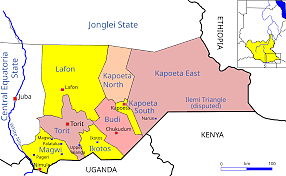
Magwi County, located in Eastern Equatoria State, South Sudan, is a fertile and diverse agricultural zone bordering Uganda. Unlike the semi-arid areas of Greater Kapoeta, Magwi enjoys moderate rainfall and arable land, making it one of the state’s most productive farming areas. Communities rely on the cultivation of maize, cassava, groundnuts, sorghum, sesame, and horticultural crops, alongside livestock keeping.
The county is home to a vibrant population of youth, women, returnees, and smallholder farmers, many of whom face challenges related to market access, limited extension services, post-harvest losses, and climate change impacts. However, its strategic location along the Uganda–South Sudan trade corridor offers significant opportunities for agribusiness, cross-border trade, and value chain development.
Magwi also has strong potential for agroecology and organic agriculture, with growing interest in kitchen gardens, soil fertility management, agroforestry, and farmer cooperatives. By integrating sustainable farming practices with entrepreneurship and cooperative marketing, Magwi can become a model for food security, rural employment, and climate-resilient livelihoods in Eastern Equatoria.
Sistema de fazenda e agricultura
Detalhes do sistema agrícola
At Empower Youth in Africa & Livelihood (EYAL), our agroecology farm in Eastern Equatoria serves as a living classroom and demonstration site where we train youth, women, and smallholder farmers in regenerative and organic farming practices.
On the farm, we apply soil-building techniques such as composting, mulching, crop rotation, and cover cropping to restore fertility and improve yields without chemical inputs. We integrate crop-livestock systems to recycle nutrients, establish pollinator-friendly corridors and beekeeping to support biodiversity, and use rainwater harvesting and drip irrigation to adapt to dryland conditions.
Beyond production, our farm connects farmers to agribusiness skills and market opportunities, showing how sustainable farming can generate income while protecting ecosystems. It is both a training hub and a scalable model for climate-resilient agriculture that empowers communities to build food security, sustainable livelihoods, and environmental stewardship
Qual é o seu sonho para o futuro da sua quinta e/ou da sua localização em geral?
Our dream is to transform EYAL’s agroecology farm into a flagship center for sustainable, climate-resilient agriculture in Eastern Equatoria. We envision a future where youth, women, and smallholder farmers across Magwi, Kapoeta, and Budi can access knowledge, resources, and markets to grow healthy, diverse, and productive farms using regenerative and organic practices.
Beyond the farm, we aspire to see Greater Kapoeta and Magwi counties become models of ecological restoration, thriving rural livelihoods, and resilient communities, where degraded soils are restored, water and biodiversity are protected, and farmers generate sustainable incomes through market-oriented agroecology enterprises.
Ultimately, we want our work to demonstrate that farming can be a driver of peace, prosperity, and environmental stewardship, inspiring a new generation of agripreneurs and resilient communities across South Sudan.
NDVI Monitoring
Ask the admin to Enable NDVI monitoring to this location to get monthly vegetation index images (3 years historical data + automatic monthly updates).